Venmo vs Cash App: Which to Use for What

Venmo and Cash App do the same core job — send money to someone with a phone number — and diverge everywhere else. Venmo is a payments app that grew a social feed. Cash App is a payments app that grew into a bank-adjacent account with stock and bitcoin trading attached.
If you only split dinner, either works and you should use whichever your friends use. The differences matter as soon as money sits in the app rather than passing through it.
Fees checked 20 Sep 2026. Both apps price instant transfers as a percentage with a floor and a ceiling, and both change the numbers without announcement. Confirm on the app’s own fee page before relying on a figure.
Side by side
| Venmo | Cash App | |
| Send from balance or bank | Free | Free |
| Send with a credit card | Around 3% | Around 3% |
| Standard transfer out | Free, 1–3 business days | Free, 1–3 business days |
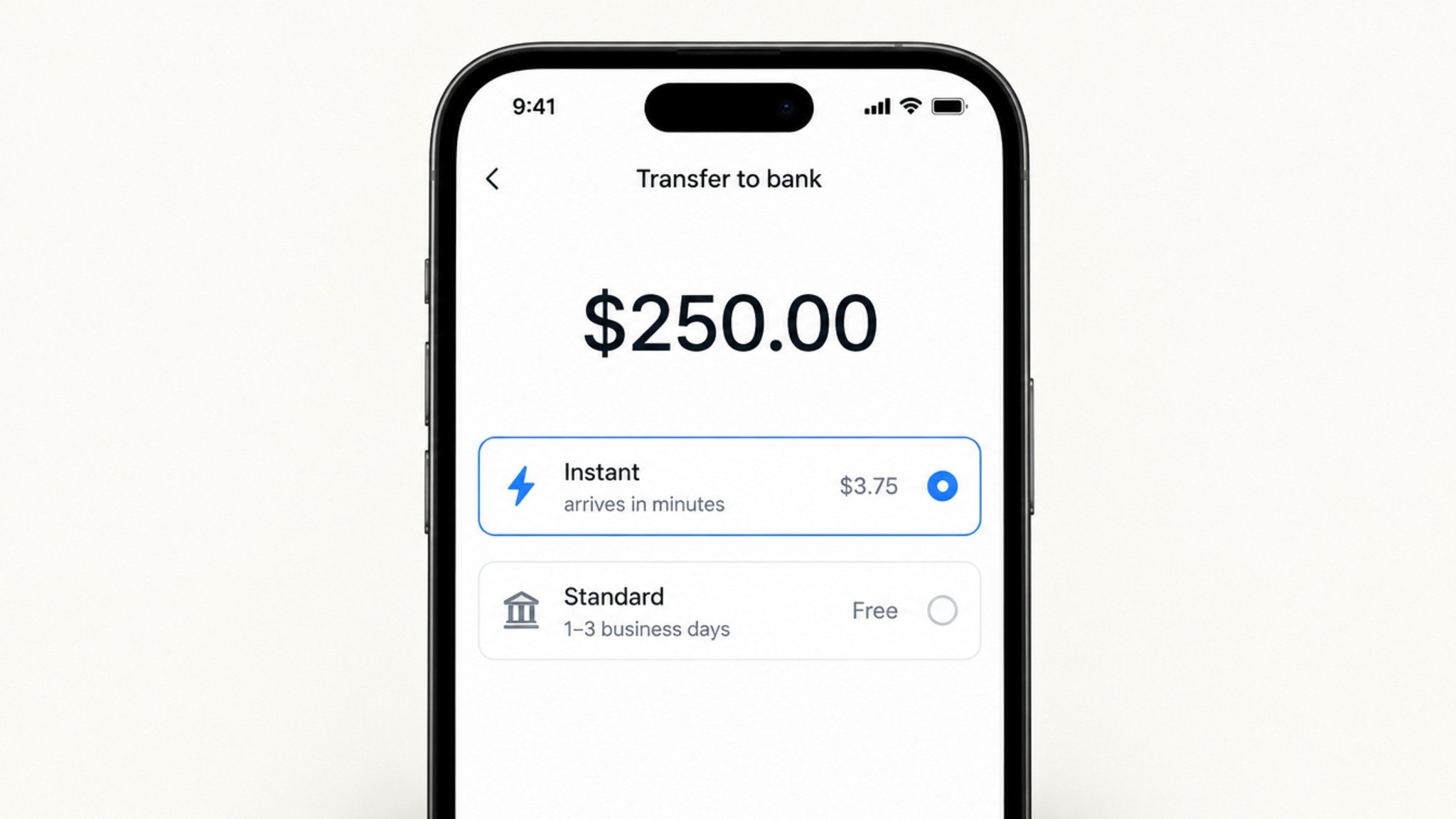
| Instant transfer out | Percentage fee, min and max apply | Percentage fee, min applies |
| Debit card | Yes | Yes |
| Direct deposit | Yes | Yes, with early-pay marketing |
| Investing | Crypto only | Stocks and bitcoin |
| Social feed | Yes, on by default | No |
The feed is the main practical difference
Venmo shows payments — who paid whom, with the note — to friends by default, and historically to a wider audience. The amount is hidden; everything else is not. It is a genuine privacy question for anyone paying a therapist, a landlord, or a family member who would rather it were quiet.
The setting is in the app under privacy, and it is worth changing to private for past and future transactions. Cash App has no feed, which for many people settles the comparison on its own.
Neither protects you from a scam you agreed to
This is the part both apps play down. Regulation E covers transfers you did not authorise — your account was taken over, someone used it without permission. It does not cover a transfer you did authorise because someone persuaded you to.
So a marketplace seller who takes your Cash App payment and never posts the item, a "landlord" who takes a deposit for a flat that does not exist, a caller claiming to be from your bank — all are authorised payments, and the money is generally gone. Both companies say plainly that their apps are for people you know.
Venmo does sell a purchase-protected option: paying a business profile, or tagging a payment as a purchase, adds seller obligations and buyer recourse at a fee to the seller. That is the only route to protection in either app, and it does not apply to ordinary friend-to-friend payments.
Money sitting in the app
Balances in these apps are not automatically insured the way a bank deposit is. Coverage depends on the specific feature: enabling direct deposit or the card typically moves your balance to a partner bank where FDIC coverage applies, while a plain unused balance may not be covered at all.
The safe habit regardless: move balances to a bank account rather than treating either app as a savings account. Neither pays a competitive rate, and a savings account does.
Which to use
- Splitting costs with friends. Whichever they use. Network effects beat features here.
- Getting paid by clients or customers. Neither, for anything substantial — use an invoice and a business account. See business checking for a side hustle.
- Buying from a stranger. Neither. Use a method with purchase protection.
- Moving money between your own accounts. Neither. Use ACH or Zelle, both free.
Related
The other pairs: Cash App vs Zelle and PayPal vs Venmo. All three at once: PayPal, Venmo or Cash App.
On fees specifically: instant transfer fees compared and what it costs to send money with a credit card.
Common questions
Is Venmo or Cash App cheaper?
They are priced almost identically: free from a balance or bank, a percentage for instant transfers out, around 3% to send with a credit card. Choose on features and privacy, not price.
Can I get my money back if I am scammed?
Usually not. Both are covered by Regulation E only for transfers you did not authorise. A payment you were talked into is treated as authorised, and recovery depends on the recipient returning it.
Is my balance FDIC insured?
Only in some configurations. Coverage typically applies through a partner bank once you enable direct deposit or the card. A plain balance may not be insured at all, so do not store money in either app.
Can other people see my Venmo payments?
By default friends can see who you paid and the note, though not the amount. You can set past and future transactions to private in the app.
Figures and rules in this article are checked against the official sources below. Where they disagree with us, they win.