Best Credit Cards for No Credit (September 2026): Secured Cards You Can Get Now

Updated October 2, 2026. If you're a young adult or just turned 18 with no credit history, these are the cards you can realistically get approved for. Under 21, you'll need to show your own income; see how to build credit at 18.
Currently a student? You can usually skip the security deposit entirely — student cards approve on enrolment rather than credit history. See our best student credit cards guide, which covers four cards worth more than a secured card.
If you are just starting your financial journey, the most frustrating truth is this: You need credit to build credit.
Lenders are naturally cautious about giving credit cards to people with no credit history (often called a "thin file"). Fortunately, the market has several low-risk, beginner-friendly cards designed specifically to solve this problem.
For a beginner, the question is not about rewards or travel points; it is about finding a card that checks three essential boxes:
- Reports to All 3 Bureaus: It must report your activity to Equifax, Experian, and TransUnion.
- Has a Clear Path to Upgrade: It should offer a path to convert to a better, unsecured card so you can get your security deposit back.
- Has a $0 Annual Fee: You should never pay a fee just to build your credit.
Here is a look at the best credit cards and tools available to help you establish a strong credit score from scratch.
Card availability checked 25 September 2026.
The best secured card you can apply for now
(No annual fee, low deposit, automatic credit-line reviews)
Capital One Platinum Secured Credit Card
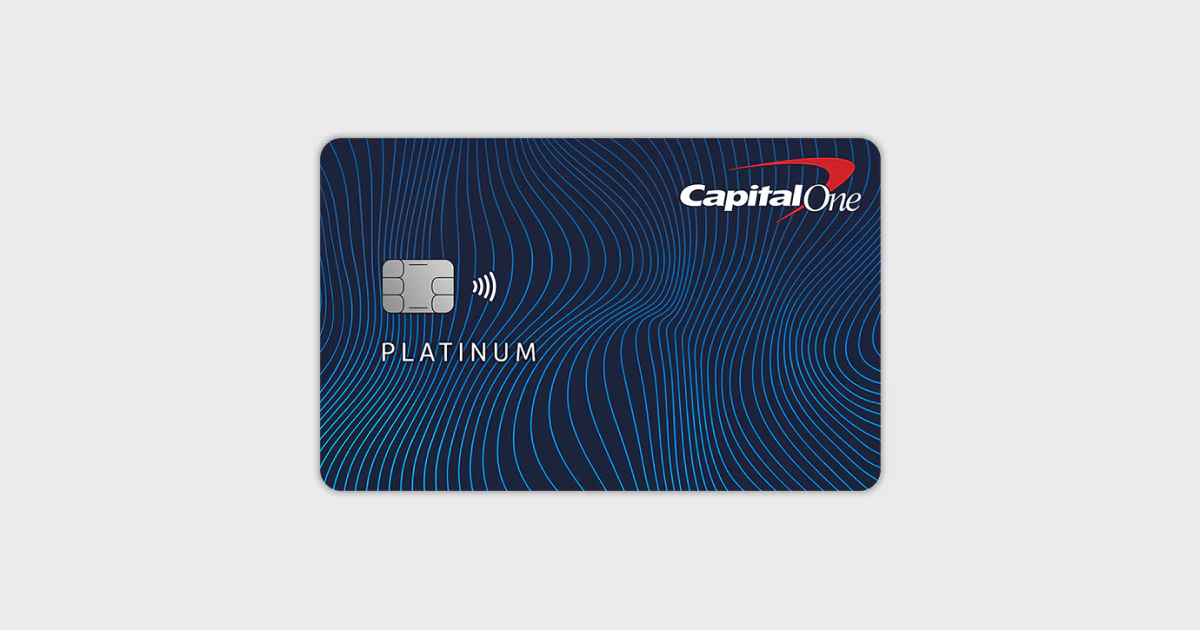
With the Discover it® Secured paused to new applicants (see below), the Capital One Platinum Secured is the strongest no-fee secured card most beginners can open today, and its low deposit makes it the easiest to start with.
- Type: Secured credit card
- Annual fee: $0
- Security deposit: refundable, starting at $49, $99 or $200 for a $200 starting credit line, depending on your application.
- Upgrade path: Capital One reviews you for a higher credit line after six months of on-time payments, which helps keep your utilization low.
- Drawback: No rewards. It's a credit-building tool, and that's all.
What happened to the Discover it® Secured?
For years it was the default pick, because it paid 2% cash back at gas stations and restaurants (on up to $1,000 a quarter), matched your first year's cash back, and reviewed you for an upgrade after seven months. Capital One, which bought Discover in 2025, stopped taking new applications on June 2, 2026 and says it plans to relaunch the card later this year.
- If you already have one: it keeps working. Discover accounts are moving to Capital One's website and app in stages through 2027.
- If you were planning to apply: check whether it has relaunched before you choose. We'll update this page when it does.
The Fastest Way to Build Credit (The Two Key Habits)
Once you get a secured card, your goal is to manage it perfectly for six to twelve months so you can qualify for a regular, unsecured card and get your deposit back.
You only need to master two habits:
1. Payment History (35% of Your Score)
This is the most important factor in your FICO score. You must pay at least the minimum amount due, on or before the due date, every single month. Never be late.
- Action: Set up auto-pay immediately to cover at least the minimum amount. If possible, pay your balance in full each month.
2. Credit Utilization (30% of Your Score)
Credit utilization is the ratio of your credit card balance to your credit limit. A low ratio signals to lenders that you use credit responsibly and are not relying on it to cover bills.
- Rule: Aim to keep your utilization below 30%. If your credit limit is $500, try to keep your balance under $150.
- Best Practice: For maximum credit score growth, aim to keep your balance under 10% and pay the full statement balance every month.
Alternative Path: Credit Builder Loans (Saving + Building)
If you absolutely cannot afford the deposit for a secured card, or if you already have trouble with debt management, a Credit-Builder Loan can be a safer, enforced savings tool.
- How it Works: The money you borrow is immediately locked in a savings account. You make monthly payments (plus interest) for 6–12 months. Your payments are reported to the credit bureaus. Once you pay off the "loan," the money is released to you.
- The Benefit: It creates a positive payment history (an installment loan) and forces you to save the cash for a deposit or an emergency fund, all while avoiding the risk of revolving debt that a secured card carries.
What about "no deposit" and "no credit check" cards?
Two of the most searched phrases in this category describe products that mostly should not be your first card. Worth being straight about both.
"Secured credit card with no deposit"
This does not exist, because the deposit is what makes the card secured — it is the lender's collateral, and it becomes your credit limit. What people usually mean is an unsecured starter card, which does exist: some issuers approve thin files without collateral, and if you are enrolled in education a student card will usually approve you on enrolment rather than credit history. That route genuinely skips the deposit, and it is covered in our best student credit cards guide.
The remaining option is being added as an authorised user on someone else's card. No deposit, no application, and the account history can appear on your file — though whether it helps depends on the issuer reporting authorised users, which not all do.
"Secured credit card with no credit check"
Closer to real, but the phrase conflates two things. Most secured cards still run a check; what the deposit does is make approval very likely regardless of what the check finds. So the practical answer is that a secured card is effectively no-credit-check for approval purposes, even though a check happens.
Be wary of cards marketed explicitly on "no credit check". That promise is usually paid for elsewhere — an annual fee, a monthly maintenance charge, a processing fee on top of your deposit, or no reporting to all three bureaus. A card that does not report to Equifax, Experian and TransUnion builds nothing, which defeats the entire purpose of opening it.
The test to apply to any card in this category: $0 annual fee, reports to all three bureaus, refundable deposit, and a documented path to graduate to unsecured. Both cards above clear all four. Most cards advertising "no credit check" clear none of them.
Final Verdict
For most beginners today, the Capital One Platinum Secured is the card to open: no annual fee, a deposit from $49, and automatic reviews for a higher limit. If the Discover it® Secured relaunches, it becomes the better choice for anyone who wants cash back while they build credit.
If no card will approve you yet, a credit-builder product reports payments without needing an approval first. Kikoff is one of the cheaper ones and reports to the bureaus monthly. It is not a card and will not replace one — it is a way to have a file worth checking in six months. Kovo works the same way as an installment account, which adds a second account type to a thin file. Kovo may compensate us after you enter into a commercial transaction with Kovo using the links we provided. Kovo costs $10 a month for 24 months; on-time payments can help your score and late payments can hurt it.
Figures and rules in this article are checked against the official sources below. Where they disagree with us, they win.