Best Brokerage for Day Trading with Less than $5,000

The Pattern Day Trader rule is gone. On 4 June 2026, FINRA replaced PDT with intraday margin standards. There is no longer a $25,000 minimum portfolio value to day trade in a margin account, and existing PDT flags and day-trade calls were removed.
What replaced it still constrains a small account. Brokers now monitor your equity against your open positions in real time through the trading day, and the $2,000 minimum equity requirement for a margin account still applies. Any guide telling you to open a cash account to dodge the $25,000 threshold is out of date.
This changes the answer to the question in the title. Until mid-2026, the honest advice to anyone with less than $25,000 was to use a cash account and live with settlement delays. That constraint is gone, so the choice of broker now turns on execution quality, platform and how each handles intraday margin.
What the new intraday margin standards mean
Three terms are worth knowing before you trade on margin:
- Margin maintenance requirement. The minimum equity your account must hold through the day relative to your open positions. Fall below it and you have a deficit.
- Intraday margin deficit. What you get when equity drops under that requirement — you have to bring the account back up.
- Repeated failures bring restrictions. The test has moved from counting day trades to a real-time equity check, which for an active trader with a small balance is arguably the stricter regime.
There is a knock-on benefit if you were previously flagged: with PDT restrictions removed, accounts that carried a flag become eligible for programmes they were locked out of, including high-yield cash and stock lending where brokers offer them.
Does a cash account still make sense?
For some people, yes — but for a different reason. A cash account cannot lose more than you put into it, and it removes margin interest and margin calls entirely. What it no longer buys you is an exemption from a rule that no longer exists. Choose one for discipline now, not as a workaround, and understand the settlement mechanics below.
The Strategy — Trading with a Cash Account
A Cash Account is the secret weapon for small account traders.
- The Cash Account Loophole: The PDT rule does not apply to a Cash Account. This means you can execute unlimited day trades.
- The Downside: The Settlement Period: You are restricted by the "settlement period" (T+2). When you sell a stock, the cash profits take two business days to "settle" before you can use them again for a new trade.
- How to Trade: If you have $5,000, you must divide that cash into smaller chunks. You use a chunk for a trade, and then that chunk must sit idle for two days while the other chunks are used for trading.
The Simple Solution for Beginners
Use a brokerage that allows you to buy and sell instantly with a Cash Account, and offers tools to help you manage your cash cycles.
The Winner: Best for Execution Quality and Support
Fidelity Investments

Fidelity strikes the best balance between professional tools and a beginner-friendly environment. It is the safest, most reliable platform to start active trading.
- Best For: Beginners prioritizing security, high-quality trade execution, and professional-grade desktop tools (Active Trader Pro).
- Cash Account Strategy: Fidelity allows you to buy and sell stocks in a Cash Account instantly without waiting for the full T+2 settlement, often allowing you to reuse the cash the same day (a "good faith" exception), provided the sale occurs after the purchase is completed. This dramatically increases your trading frequency.
- Execution Quality: Fidelity is known for the quality of its trade execution (meaning you get the best price possible), which is crucial when scalping small profits.
- Tools: Access to the powerful Active Trader Pro desktop platform, which is fully customizable and provides excellent charting.
- Fees: $0.00 commission on stocks and ETFs.
The Runner-Up: Best for Low-Cost Professional Tools
Interactive Brokers (IBKR)
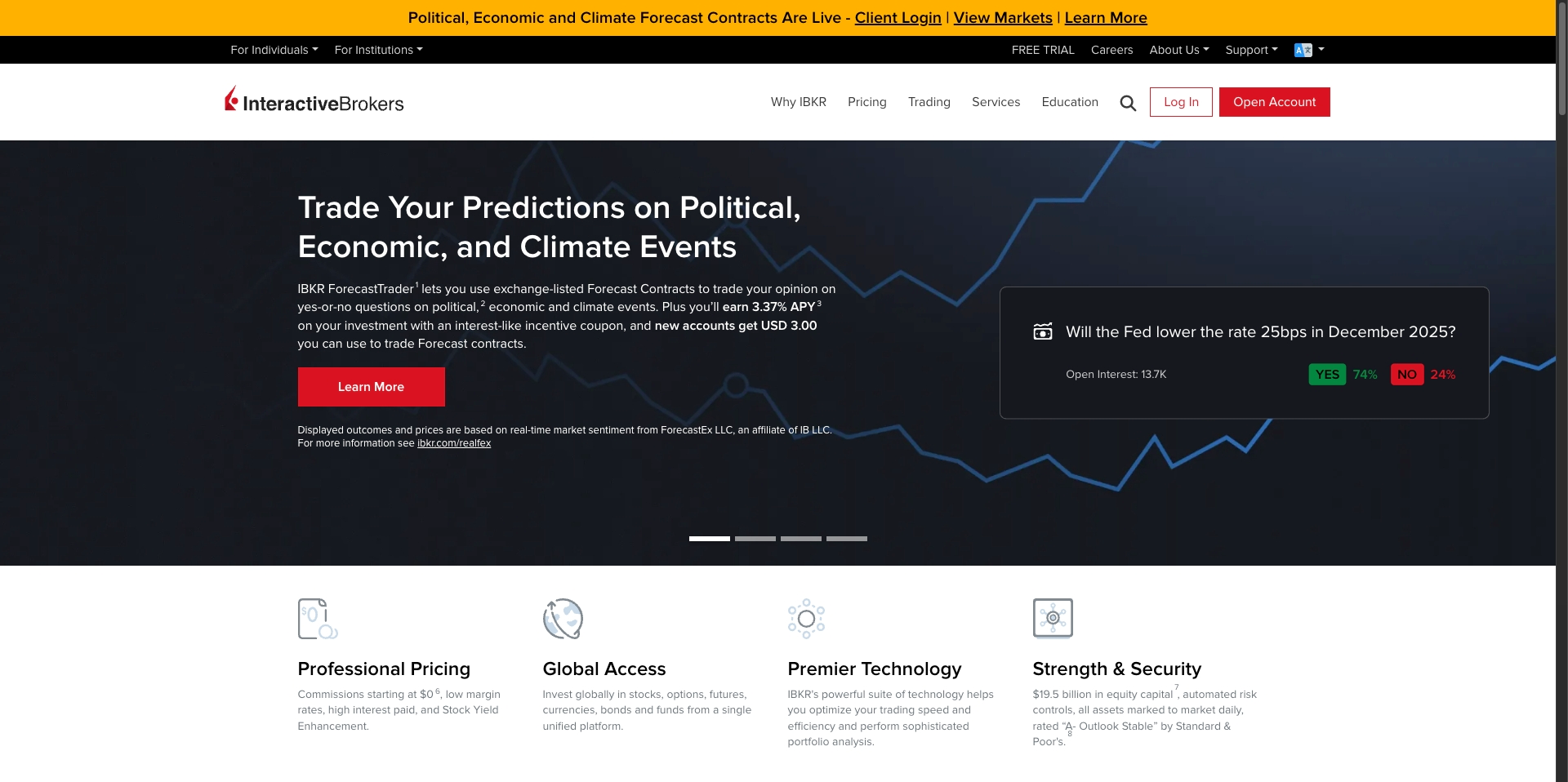
Interactive Brokers is the platform of choice for the serious, technically skilled beginner who wants the best tools and the lowest possible trading costs, even with a small account.
- Best For: Technical traders who value institutional-grade tools, advanced order types, and low-margin rates (if they decide to upgrade later).
- Cash Account Strategy: IBKR has an easy-to-use "cash cycle" calculator built into its interface that helps beginners manage their funds to avoid violating settlement rules.
- Tools: Access to the Trader Workstation (TWS) platform, which is the most powerful and customizable desktop platform available. It offers over 150 technical indicators, which is essential for technical analysis.
- Fees: $0.00 commission on US-listed stocks/ETFs, and they offer some of the lowest margin rates in the industry once you move beyond the cash account limitation.
Best for Simplicity and Mobile-First Trading
Webull

Webull is the most popular mobile-first choice. It is simple, commission-free, and offers a smooth, clean interface for a beginner transitioning from long-term investing to active trading.
- Best For: Mobile traders who prefer a streamlined interface and want access to popular features like Level 2 quotes and trading hotkeys.
- Cash Account Strategy: Webull clearly displays your "buying power" and settlement cycles, which helps beginners visualize when funds are available again.
- Tools: Webull offers robust charting and analytical tools directly in the mobile app, which is a major advantage for traders who don't want to be tied to a desktop.
- Fees: $0.00 commission on stocks, ETFs, and options contracts.
Head-to-Head: The Small Account Day Trader
| Brokerage | Key Takeaways for Trading Under $5,000 |
| Fidelity | Best For: Trade Execution Quality / Safety Key Feature: Fast funds availability (good faith exception) allows for higher trading frequency. |
| Interactive Brokers (IBKR) | Best For: Most Advanced Tools Key Feature: Built-in cash cycle management tools and institutional-grade charts (TWS). |
| Webull | Best For: Mobile-First Experience Key Feature: Free Level 2 quotes and strong charting directly in the mobile app. |
Final Verdict: Security and Accessibility Win
For the true beginner who is actively learning and trading less than $5,000, Fidelity is the safest, most reliable platform. Its combination of execution quality and high-level support offers the best learning environment.
Before you attempt any live day trading with real money, you should use the broker's Paper Trading or simulated account (often called "PaperMoney" on thinkorswim). This allows you to practice your strategies with real market data without risking any of your capital. Proven profitability in a simulator is the first step in any active trading plan.
Figures and rules in this article are checked against the official sources below. Where they disagree with us, they win.