
Where Is the Account Number on a Check?
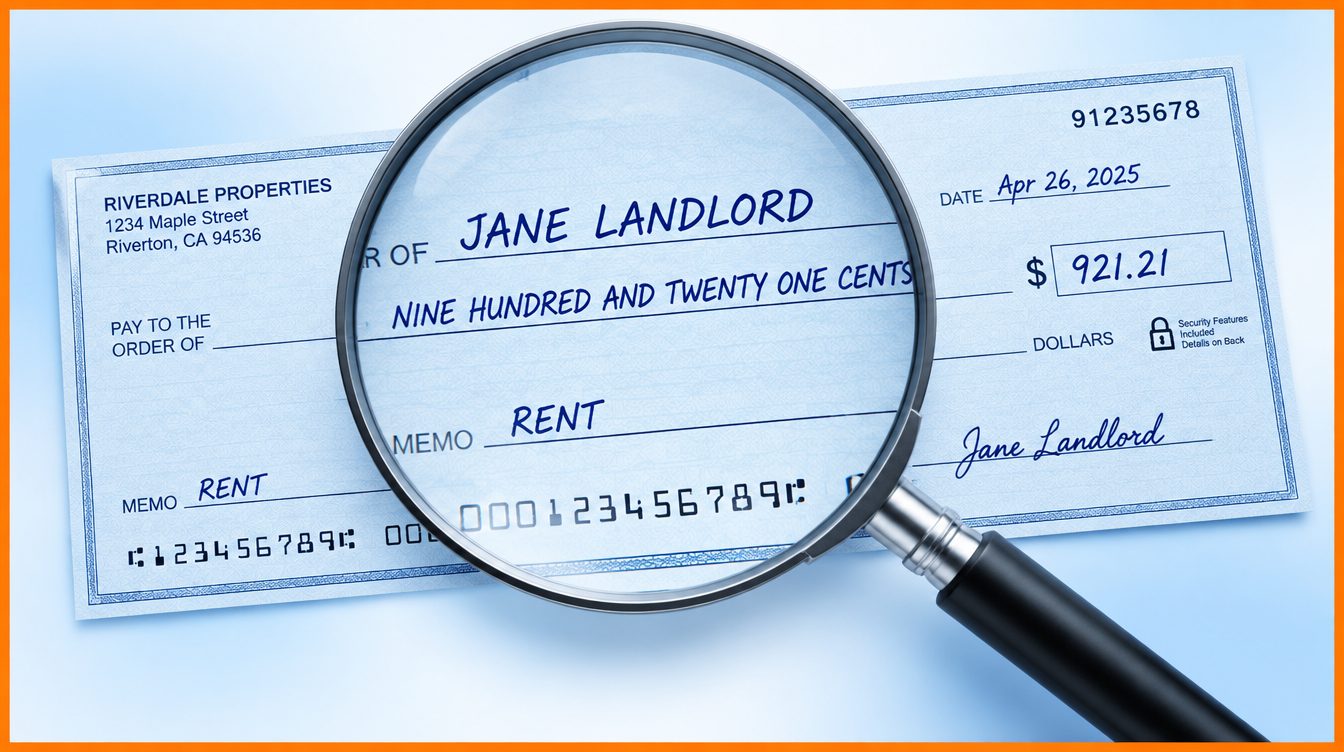
The account number identifies your specific account at your bank. The routing number says which bank; the account number says which of its millions of accounts is yours. It is the second of the three numbers printed along the bottom of a check.
It is also the number people misread most, because unlike the routing number it has no fixed length to check against.

Where to look
On the bottom line of the check — the MICR line, printed in the blocky machine-readable font — there are three numbers. In the standard layout:
| Reading left to right | What it is | How to recognise it |
| First | Routing number | Exactly 9 digits, always |
| Second | Account number | Typically 8–12 digits, no fixed length |
| Third | Check number | Short, and matches the number in the top-right corner of the check |
Identify it by elimination, not by position. Find the nine-digit block — that is the routing number. Find the short number that matches the top-right corner — that is the check number. What remains is the account number. This works even on the minority of checks that print the check number first.
Why the length varies
Routing numbers are issued centrally and follow a fixed nine-digit format. Account numbers are not. Each bank assigns its own, in whatever length its core banking system uses, so the range across US banks runs from about five digits to seventeen.
This matters when you type it into a form. A form that silently truncates or pads your account number will produce a failed transfer with no obvious cause. Copy it digit for digit, including any leading zeros, which are part of the number and are routinely dropped by people typing from memory.
What it is not
- Not your debit card number. That is 16 digits, belongs to the card, and changes when the card is replaced. Your account number survives a lost card.
- Not your online banking username or customer number. Some banks issue a separate customer ID for login. It is not interchangeable with the account number and will be rejected by a payment form.
- Not the check number. The check number is a sequence counter for your own bookkeeping. It identifies one piece of paper, not the account.
Finding it without a check
Checkbooks are increasingly rare and none of this requires one:
- Banking app. Open the account and look for account details. Most apps show the full number behind a tap and offer a copy button, which eliminates transcription errors.
- Statement. Printed in the header. Note that statements often mask all but the last four digits — a masked number is not usable on a form.
- Bank branch or phone line. They will verify your identity first, which is the point.
Who should get it
Treat the account number more carefully than the routing number. Routing numbers are public; account numbers are not. The two together are enough to initiate an ACH debit, which is the ordinary mechanism behind every automatic bill payment.
Give the pair to an employer setting up direct deposit, to a utility or landlord setting up autopay, or to another of your own accounts for a transfer. Do not give it to anyone who contacted you first, and be sceptical of any request that arrives by text or email, however official it looks.
If you have already given it out and regret it, call your bank. They can place a block on ACH debits or, in the worst case, issue a new account number.
Next
If you also need the routing number, that is the nine-digit block to its left — where to find the routing number on a check covers which of your bank's several routing numbers each kind of form is asking for.
Once you have both numbers: how long a check takes to clear, how to endorse a check, and how to stop payment.
Common questions
How many digits is an account number?
There is no fixed length. Most fall between 8 and 12 digits, but some banks issue as few as 5 and some as many as 17. Only the routing number has a fixed length.
Is the account number in the middle of the bottom line?
Usually, yes. Reading left to right it is the second of three numbers. A minority of banks print the check number first, which is why counting digits is more reliable than counting positions.
Is my account number the same as my debit card number?
No. A debit card number is 16 digits and belongs to the card, not the account. Replacing a lost card changes the card number and leaves the account number unchanged.
Can I find my account number without a check?
Yes — your banking app under account details, any paper statement, or by calling the number on the back of your debit card.
Figures and rules in this article are checked against the official sources below. Where they disagree with us, they win.


