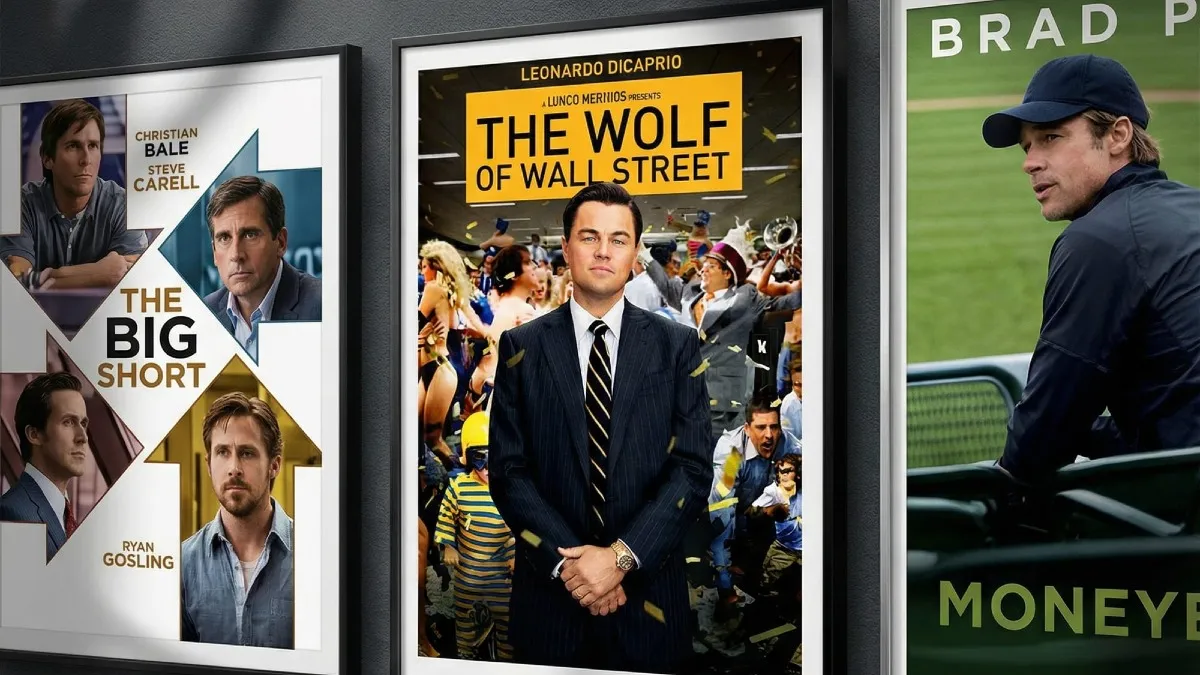
Hollywood loves Wall Street. The high stakes, the massive fortunes, and the crushing losses make for incredible drama.
But if you look past the drama, these movies are often hiding valuable lessons about psychology, risk, and market mechanics.
Here are the 10 best movies about investing that every investor needs to watch, ranked by their educational value.
1. The Big Short (2015)
The Vibe: Fast-paced, hilarious, and terrifying.
The Plot: Based on the true story of the few eccentric investors who predicted the 2008 housing market crash and bet against the American economy.
Why Watch: It explains complex financial instruments (like subprime mortgages and CDOs) using celebrity cameos, like Margot Robbie in a bubble bath. It’s a masterclass in skepticism.
🐂 Investor Takeaway: "The market" isn't always right. Just because everyone else is buying something doesn't mean it has value. Do your own research, even if it makes you look crazy.
2. Dumb Money (2023)
The Vibe: Modern, relatable, and rebellious.
The Plot: The true story of the GameStop (GME) "short squeeze" of 2021, where a group of Reddit retail investors took on massive hedge funds.
Why Watch: This is the most culturally relevant movie for new investors today. It perfectly captures the power of social media, FOMO (Fear Of Missing Out), and the "David vs. Goliath" mentality of retail trading.
🐂 Investor Takeaway: Understanding "market sentiment" is just as important as understanding the numbers. Also, be careful when investing based on memes—volatility cuts both ways.
3. Margin Call (2011)
The Vibe: Tense, quiet, and realistic.
The Plot: Set over a single 24-hour period at an investment bank at the very start of the 2008 financial crisis. An analyst discovers a math error that could bankrupt the firm, and the executives have to decide whether to sell their toxic assets to unsuspecting clients to save themselves.
Why Watch: It strips away the glamour. There are no yachts or parties—just people in suits in a boardroom making decisions that will ruin millions of lives.
🐂 Investor Takeaway: If you don't understand the product you are buying, you are the product. Wall Street looks out for Wall Street first, not you.
4. Moneyball (2011)
The Vibe: Inspiring and analytical.
The Plot: Wait, a baseball movie? Yes. It follows Billy Beane (Brad Pitt), the GM of the Oakland A's, who uses data and statistics to build a winning team on a tiny budget, ignoring the "gut feelings" of old-school scouts.
Why Watch: This is secretly the best movie about Value Investing ever made. It’s about finding undervalued assets that the rest of the market has overlooked.
🐂 Investor Takeaway: Ignore the noise and the "narrative." Trust the data. If the numbers say an asset is undervalued, buy it—even if it's not popular.
5. The Wolf of Wall Street (2013)
The Vibe: Pure, unadulterated chaos.
The Plot: The rise and fall of Jordan Belfort, a penny-stock broker who scammed investors out of millions to fuel a lifestyle of debauchery.
Why Watch: It’s entertaining, sure. But pay attention to how he makes money. He sells worthless "penny stocks" to people by promising them guaranteed returns.
🐂 Investor Takeaway: If a salesperson calls you with a "sure thing," hang up. High-pressure sales tactics are the biggest red flag in finance.
6. Trading Places (1983)
The Vibe: A classic 80s comedy.
The Plot: A wealthy commodities broker (Dan Aykroyd) and a street hustler (Eddie Murphy) are switched as part of a bet by two cruel billionaires.
Why Watch: Beneath the jokes, it actually teaches you about commodities markets and futures trading. The climax of the movie hinges on a "crop report" for orange juice—a real thing that moves markets.
🐂 Investor Takeaway: Information is the most valuable currency on Wall Street. (Also: "Buy low, sell high.")
7. Wall Street (1987)
The Vibe: The original 80s corporate thriller.
The Plot: A young stockbroker, Bud Fox, is seduced by the illegal, insider-trading world of the ruthless Gordon Gekko.
Why Watch: It introduced the world to the phrase "Greed is good." It shows the seduction of fast money and the legal consequences of insider trading.
🐂 Investor Takeaway: There are no shortcuts. If you are getting "inside info," you are probably breaking the law.
8. Too Big to Fail (2011)
The Vibe: A political thriller documentary-drama.
The Plot: It chronicles the 2008 financial meltdown from the perspective of the government officials (like the Treasury Secretary) trying to save the global economy.
Why Watch: It shows you the "Systemic Risk." It explains how banks are interconnected and why the government felt they had no choice but to bail them out.
🐂 Investor Takeaway: Understand the "Macro" picture. Government policy and interest rates drive the stock market more than almost anything else.
9. Enron: The Smartest Guys in the Room (2005)
The Vibe: A shocking documentary.
The Plot: The story of how Enron, once the 7th largest company in America, turned out to be a complete fraud.
Why Watch: It shows that even "blue chip" companies can go to zero. It’s a lesson in accounting fraud and corporate hubris.
🐂 Investor Takeaway: Diversify. Never put all your money into one stock, even if it seems like a giant that can't fail.
10. Inside Job (2010)
The Vibe: Infuriating and educational.
The Plot: A comprehensive documentary narrated by Matt Damon that dissects exactly what caused the 2008 crisis. It interviews the actual people involved.
Why Watch: If The Big Short made you laugh about the crisis, Inside Job will make you angry—and informed.
🐂 Investor Takeaway: Regulation matters. Unchecked financial systems tend to blow up.
Bottom Line
While these films are meant to entertain, their true value lies in the warnings they provide: the market is driven by human emotion, and those who can’t control their emotions—or understand the data—usually end up paying the price.
The next time you’re looking for something to stream, pick one of these. You might just save yourself from a big mistake on your next trade.
What’s your "must-watch" finance movie?
Did I miss a classic, or is there a documentary that changed how you manage your portfolio? Let me know in the comments!
