It happens to everyone eventually.
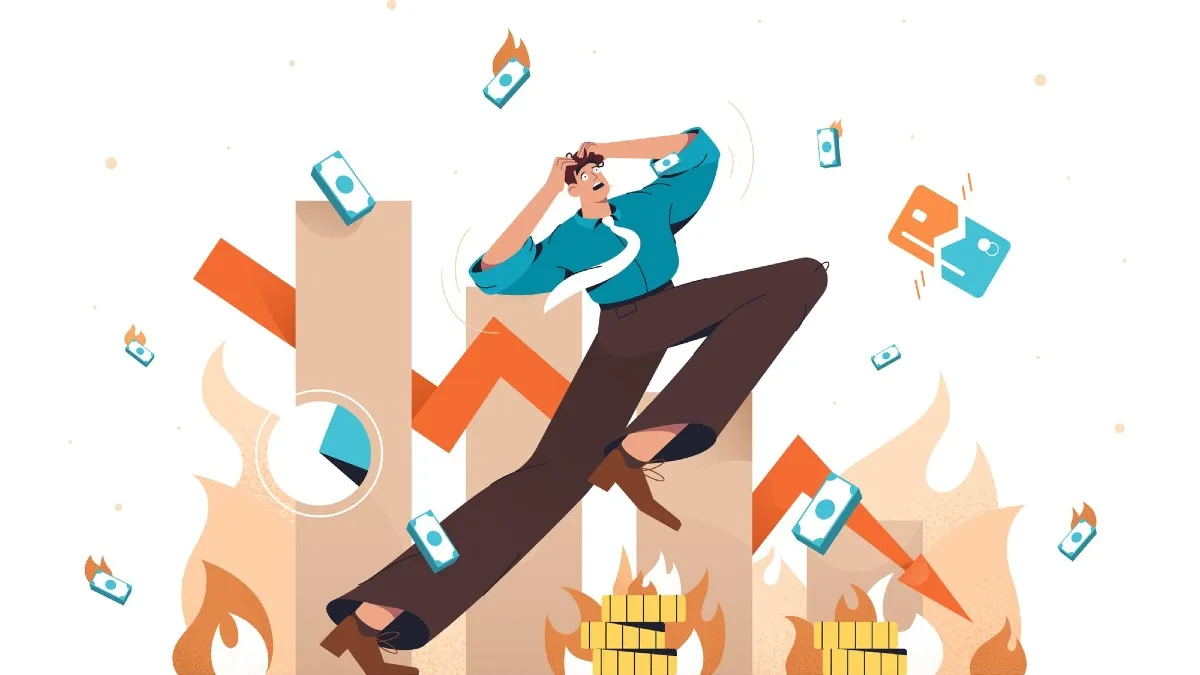
You wake up, grab your coffee, and check your phone. You open your brokerage app, expecting to see the usual fluctuations. Instead, you see a sea of red.
Your portfolio is down 15%. The news is screaming about a "Recession," "Bubble Burst," or "Global Crisis." By lunch, you are down 20%.
Your stomach drops. Your heart races. Your brain screams one command: "SELL EVERYTHING! SAVE WHAT'S LEFT!"
Welcome to your first Market Crash.
It is a rite of passage. Every single wealthy investor—from Warren Buffett to your rich uncle—has lived through this. They didn't get rich by avoiding crashes; they got rich by handling them correctly.
If you are currently staring at a red screen and panicking, put the phone down and read this guide. Here is how to survive without blowing up your financial future.
Step 1: The "Zoom Out" Reality Check
The first thing you must do is gain perspective.
When you are in the middle of a crash, it feels like the world is ending. It feels like the stock market is going to zero.
Spoiler Alert: It won’t.
Since the inception of the US stock market, there have been depressions, world wars, pandemics, terrorist attacks, and housing crises.
- 1929: The market crashed 89%.
- 2000: The Dot-Com bubble burst.
- 2008: The Global Financial Crisis cut portfolios in half.
- 2020: COVID-19 tanked the market by 30% in a month.
- 2022: Inflation dragged the S&P 500 down nearly 20%.
The Recovery Rate: 100%.
Every single time the market has crashed, it has eventually recovered and gone on to reach new all-time highs. It might take months, or it might take years, but the chart moves up and to the right.
If you sell now, you are betting against history.
Step 2: Do Not Touch the "Sell" Button
This is the golden rule.
You have not lost any money yet. You have only lost "Paper Value."
If you bought a house for $400,000, and next year the market dips and it's appraised at $350,000, do you run out and sell the house to "stop the losses"? No. You just live in it and wait for the price to recover.
Stocks are the same.
- Paper Loss: The number on the screen is lower. (This is annoying, but not fatal).
- Realized Loss: You hit the "Sell" button and lock in that loss forever. (This is fatal).
When you panic sell, you are doing the exact opposite of the goal. You are Selling Low. You are crystallizing a temporary problem into a permanent loss.
Step 3: Delete the App (Seriously)
This sounds like a joke, but it is a legitimate strategy.
Psychologists have found that the pain of losing money is twice as powerful as the joy of gaining money. This is called "Loss Aversion."
Every time you refresh your app and see the red numbers, you are triggering a cortisol (stress) spike in your brain. This chemical reaction shuts down your logical reasoning and amplifies your "fight or flight" response.
If you are a long-term investor (meaning you don't need this cash for 5+ years), today's price is irrelevant.
The Strategy:
- Delete Robinhood/Fidelity/Schwab from your phone.
- Vow not to look at it for 30 days.
- Go for a walk.
By the time you reinstall it, the worst of the panic is usually over.
Step 4: Reframe the Narrative (The "Sale" Mindset)
Imagine you walk into your favorite clothing store, and everything is marked up 20%. You would be annoyed. Now imagine you walk in, and everything is 20% off. You would be excited. You would stock up.
A Market Crash is a "Storewide Sale" on Wealth.
- Apple is on sale.
- Microsoft is on sale.
- The S&P 500 is on sale.
If you were happy buying stocks last month when they were expensive, you should be thrilled to buy them today when they are cheap.
The "Power Move": If you have extra cash on the sidelines (and your job is secure), a crash is the best time to increase your 401(k) contributions or deploy that cash. This lowers your "Average Cost" per share. When the market eventually recovers, your gains will be significantly higher than if you had stopped investing.
Step 5: Look for the Silver Lining (Tax-Loss Harvesting)
If you have a taxable brokerage account (not an IRA/401k), a crash gives you a unique gift: Tax Deductions.
You can use a strategy called Tax-Loss Harvesting:
- You sell an ETF that is down $2,000. (Realizing the loss).
- You immediately buy a similar (but not identical) ETF to stay invested in the market.
- You use that $2,000 "loss" to offset your taxes at the end of the year.
You basically turn your portfolio's pain into a tax refund from the IRS. It’s the only consolation prize of a bear market.
Common Mistakes to Avoid
1. Timing the Bottom"I'll sell now to save cash, and I'll buy back in when it hits the bottom." You will never time the bottom. The market usually turns around when the news is at its absolute worst. By the time you feel "safe" enough to buy back in, the market will have already rallied 20%, and you will have missed the boat.
2. Stopping Contributions Do not pause your automatic 401(k) deposits. Buying shares during a downturn is how millionaires are made. If you stop contributing, you are missing the most valuable accumulation phase of your life.
Conclusion: This is the Price of Admission
Market crashes are the "admission fee" you pay for high returns.
If the stock market went up in a straight line every single day, it would be a savings account, and it would pay 1%. The reason stocks pay 8% to 10% over the long run is precisely because they are risky.
You are getting paid to endure this stomach ache.
