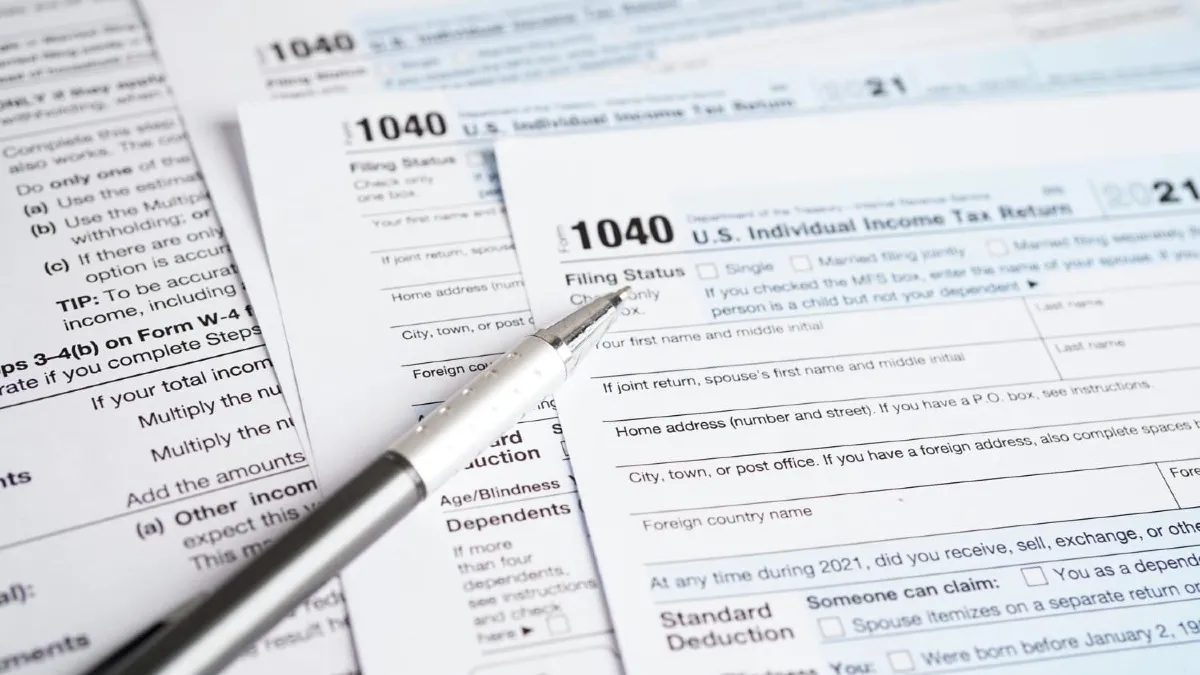
If you spent 2025 building a side hustle, flipping stocks on Robinhood, or finally seeing your niche sites turn a profit, you’re about to meet a new tax requirement: The Quarterly Estimated Payment.
Most beginners think taxes are a "once a year" event in April. But the U.S. tax system is actually "pay-as-you-go." If you aren't paying your taxes throughout the year via a W-2 paycheck, the IRS expects you to send them a check every three months using Form 1040-ES.
TL;DR: If you expect to owe more than $1,000 in taxes for 2026 (beyond what’s withheld from your day job), you must make quarterly payments. Your first payment for 2026 is due April 15th—the same day your 2025 return is due.
Why Does Form 1040-ES Even Exist?
When you work a 9-to-5, your employer acts as a tax collector. They take a slice of every paycheck and send it to the IRS on your behalf. When you are the boss, that responsibility falls on you.
The IRS doesn't want to wait until April 2027 to get the money you earned in January 2026. If you hold onto that money for too long, they consider it an "underpayment" and will charge you interest. As of Q1 2026, the IRS underpayment rate is 7%, though it is scheduled to drop to 6% for Q2. While that sounds low, it is compounded daily. In a high-interest environment, those penalties add up to a significant "success tax" you shouldn't have to pay.
Who Actually Needs to File?
You don't need to worry about this if your only income is a standard salary. You do need to worry about it if you have:
- Self-Employment Income: Freelancing, niche site ad revenue, or 1099 contracts.
- Capital Gains: If you sold SIDU, RDW, or other stocks for a significant profit this quarter.
- Dividends & Interest: With high-yield savings accounts paying well in 2026, your interest income might push you over the $1,000 threshold.
- The "Side Hustle" Trap: If your side hustle makes $10,000 a year but your day job only withholds enough to cover your salary, you’ll likely owe enough to trigger a penalty.
The "Safe Harbor" Rules (Your Penalty Shield)
The IRS doesn't expect you to have a crystal ball. They know you don't know exactly what your websites or stocks will make in November. To protect you, they created Safe Harbor rules. You won't face a penalty if you pay the smaller of these two:
The 100% Rule (The "Look Back" Method)
Pay 100% of the total tax shown on your 2025 return. Look at Line 24 of your 1040. If that number was $8,000, and you pay $2,000 every quarter in 2026, you are "safe"—even if you end up making a million dollars this year.
- The High-Earner Twist: If your 2025 Adjusted Gross Income (AGI) was over $150,000, you must pay 110% of last year’s tax to be safe.
The 90% Rule (The "Current Year" Method)
Pay 90% of what you expect to owe for 2026. This is riskier because if you have a massive Q4 in your business, you might realize too late that you underpaid in Q1.
How to Calculate Your Payment (The "Napkin Math" Version)
If you don't want to use the complex worksheet in the 1040-ES PDF, use this 3-step process:
- Estimate your 2026 Profit: (Revenue minus Expenses). Let's say $20,000.
- Calculate Self-Employment Tax: Multiply that profit by 15.3%. ($3,060).
- Add Income Tax: Estimate your tax bracket (usually 12% to 22% for beginners).
- Divide by 4: That is your quarterly check.
The 2026 Deadlines: Don't Be Late
The "quarters" are not actually three months each. The IRS uses a specific, somewhat confusing schedule:
- Payment 1: April 15, 2026 (Income from Jan 1 – Mar 31)
- Payment 2: June 15, 2026 (Income from Apr 1 – May 31) — Note: This is only a 2-month window.
- Payment 3: Sept 15, 2026 (Income from Jun 1 – Aug 31)
- Payment 4: Jan 15, 2027 (Income from Sept 1 – Dec 31)
How to Pay (Skip the Paperwork)
In 2026, you should never mail a paper check. It’s too easy for it to get lost in the shuffle.
- IRS Direct Pay: This is the gold standard. Go to
irs.gov/directpay. Choose "Estimated Tax" as the reason, "1040" as the form, and "2026" as the year. It’s free and takes 2 minutes. - IRS Online Account: If you want to see a history of all your payments, set up an account with ID.me. This is essential if you plan on scaling your business.
- The "W-4 Hack": This is the ultimate beginner secret. If you have a day job, you can skip the 1040-ES entirely. Just go to your employer's HR portal and ask them to withhold an "extra amount" from each paycheck (Line 4c on the W-4).
The State Tax "Hidden" Requirement
While we’ve focused on the IRS, don’t forget that most states have their own rules. For those of us in Massachusetts, the threshold is even lower.
- The $400 Rule: In MA, you must make estimated payments if your expected tax due is more than $400.
- The Penalty: Massachusetts charges interest at the federal short-term rate plus 4%, compounded daily. That is currently even higher than the IRS rate.
- Action Step: Use the MassTaxConnect portal to send your state payments on the same day you do your federal ones.
Common Pitfalls: Why "Set it and Forget it" Can Fail
- The Income Drop: If your 2025 was a massive year but your 2026 revenue has tanked, paying 100% of last year's tax will destroy your cash flow. In this case, you must use the 90% Rule to keep cash in your business.
- The Q4 Spike: If you have a massive holiday season (common for niche sites), you might need to make a much larger payment in January (Q4) than you did in April (Q1).
Tools to Track Your 2026 Liability
You shouldn't be guessing these numbers on April 14th.
- Profit & Loss Tracking: Whether you use a pro tool like QuickBooks or a simple Smartsheet dashboard, you need to know your "Net Profit" every month.
- The "Tax Savings" Account: Never keep tax money in your operating account. As soon as you get paid, move 25-30% into a separate High-Yield Savings Account. You’ll earn 6% interest on the IRS's money before you have to hand it over.
The Psychology of Paying Quarterly
It feels painful to send the IRS money four times a year. It feels like you’re losing your "runway." But think of it this way: You are avoiding a "Debt Avalanche" next April. Many new entrepreneurs spend all their revenue as it comes in, only to realize in April that they owe $15,000 they don't have. Paying quarterly keeps your "Beginner Bull" books clean and ensures that the profit you see in your bank account is actually yours to keep.
Quick Recap: Take the 15-Minute Action Plan
Don't let the April 15th deadline pass without checking your 2026 trajectory.
- Look at your 2025 Tax Return (Line 24).
- Divide that number by 4.
- Go to IRS.gov/DirectPay and send that amount for "2026 Estimated Tax."