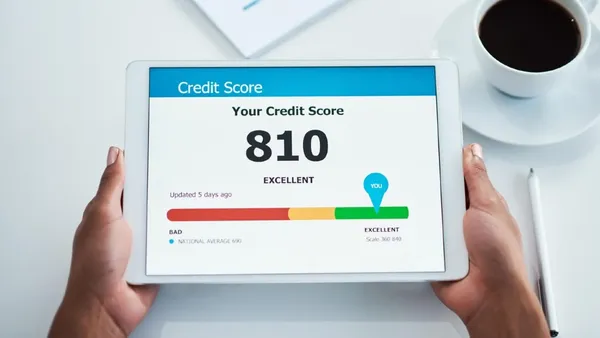
A single error on your credit report—like a late payment you actually made on time or a debt that isn’t yours—can tank your credit score by dozens of points.
In finance, those points are expensive.
A lower score can cost you thousands of dollars over the life of a loan in the form of higher interest rates, or even lead to a flat-out rejection for a mortgage, car loan, or apartment rental.
The good news? You aren't helpless. Under the Fair Credit Reporting Act (FCRA), credit bureaus are legally mandated to investigate and remove inaccurate, incomplete, or unverifiable information.
Taking control of your credit report is one of the most effective ways to "level up" your financial health. Here is how to take control and fix those errors for good.
Step 1: Identify the Error with Precision
Don’t guess or rely solely on a third-party credit monitoring app. To start a formal dispute, you need the official report.
You are entitled to a free credit report from each of the three major bureaus—Equifax, Experian, and TransUnion—via the only federally authorized site: AnnualCreditReport.com.
Once you have your reports in hand, comb through them like a detective. Common errors generally fall into four buckets:
- Identity Errors: Check for incorrect names, phone numbers, or addresses. Even a typo in your Social Security number can cause "mixed files," where someone else's bad habits end up on your report.
- Incorrect Account Status: Look for accounts marked as "open" that you closed months ago, or "late" payments that you know were paid on time.
- Data Management Errors: This often looks like a single debt being listed multiple times under different collection agency names, making it appear as though you owe significantly more than you do.
- Fraudulent Accounts: These are accounts you never opened. If you see these, it is a major red flag for identity theft and requires immediate action.
Step 2: Gather Your Evidence
In the credit world, "because I said so" doesn't work. You need to prove the data is wrong. Before drafting your dispute, collect hard evidence. You cannot simply say, "This is wrong"—you need a paper trail.
Collect high-quality copies of:
- Bank statements showing the specific payment was made on the date in question.
- Canceled checks or digital payment receipts.
- Letters from creditors (furnishers) stating an account is closed, settled, or paid in full.
- A copy of the credit report page itself, with the specific error circled or highlighted in red.
Step 3: Draft Your Formal Dispute Letter
While many bureaus encourage you to use their online dispute portals, sending a physical letter via Certified Mail with Return Receipt Requested is the gold standard.
Online portals often limit your ability to upload evidence or force you to choose from a "drop-down menu" of reasons that may not accurately describe your situation. A physical letter creates a legal paper trail that forces the bureau to track the timeline.
What to include in your letter:
- Your Identity: Full legal name, current address, and a copy of a utility bill or ID to prove who you are.
- The Reference Number: The report confirmation number for the specific bureau you are writing to.
- The Itemized List: A clear description of the item(s) you are disputing, including account numbers.
- The "Why": The specific reason for the dispute (e.g., "This account was closed in 2023, but is showing as open").
- The "Ask": A formal request that the item be deleted or corrected immediately.
Step 4: Submit to the Bureaus
You must notify the specific credit bureau that is reporting the error. If the error appears on all three reports, you must write three separate letters.
- Equifax: P.O. Box 740256, Atlanta, GA 30374
- Experian: P.O. Box 4500, Allen, TX 75013
- TransUnion: P.O. Box 2000, Chester, PA 19016
Step 5: Notify the Creditor (The "Furnisher")
To speed up the process, send a copy of your dispute and evidence to the bank, credit card issuer, or lender that provided the data (the "furnisher").
Once the lender realizes they made a mistake, they are legally required to update all the bureaus they report to. This "double-barreled" approach ensures the error doesn't just get deleted by one bureau only to pop back up later.
Step 6: The 30-Day Investigation Window
Once a bureau receives your dispute, they generally have 30 to 45 days to investigate. They will contact the lender, verify the data, and send you a written response.
- If you win: The bureau must delete or correct the item and provide you with a free copy of your updated report. This is where you see the "Beginner Bull" rally in your score.
- If you lose: If the lender "verifies" the incorrect data as accurate, don't give up. You can ask the bureau to include a "statement of dispute" (up to 100 words) in your file so future lenders can see your explanation.
Pro-Tips for the Best Outcome
- Keep Originals: Never send your original bank statements or letters. Always send high-quality copies.
- The "Paper Trail" Rule: Keep a log of every person you speak to, every letter you send, and the date you sent it. Save your Certified Mail receipts!
- Be Persistent: If a dispute is denied but you have the proof, resubmit with new evidence. If the bureaus are still not cooperating, file a formal complaint with the Consumer Financial Protection Bureau (CFPB) at consumerfinance.gov.
- Monitor the Rally: Once an error is removed, check your score 30 days later. Removing a single "major" error like a bankruptcy that wasn't yours or a 90-day late payment can result in a massive score increase almost overnight.
By taking these steps, you are protecting your financial reputation and ensuring that your hard-earned money isn't being wasted on interest rates you don't deserve. Stay aggressive, stay organized, and protect your credit like a bull!